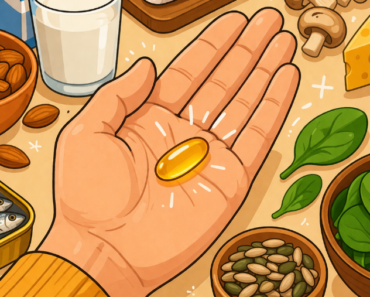
We live in an era of unprecedented caloric abundance. Never before in human history has food been so easily accessible at any hour of the day. Yet, a strange paradox has emerged: we are a society that is often overfed but undernourished. While we consume plenty of energy, our cells are frequently starving for the specific micronutrients they need to perform the complex chemistry of life.
This state of “subclinical deficiency” doesn’t usually land you in a hospital, but it does rob you of your vitality. It manifests as that persistent afternoon fog, the slow recovery after a workout, or the subtle irritability that you’ve started to accept as “normal.” Because our soil is becoming depleted and our stress levels are at an all-time high, your body’s demand for certain nutrients has skyrocketed. Here are the seven vitamins and minerals your body may be missing right now and how to bridge the gap.
1. Vitamin D3: The Sunlight Hormone
Despite its name, Vitamin D functions more like a master hormone than a simple vitamin. Every single tissue in your body—from your brain to your immune cells—has a receptor for Vitamin D.
Why it’s missing: We have become an indoor species. Even in sunny climates, our use of sunscreens and our desk-bound lives prevent the UVB exposure necessary for natural synthesis. The Impact: Without D3, your immune system remains “offline,” and your body struggles to regulate mood-stabilizing neurotransmitters like serotonin. This is why many people experience a significant dip in mental wellbeing during the darker months; it is often a hormonal signal of a “Vitamin D winter.”
2. Magnesium: The Master Relaxer
While technically a mineral, magnesium is the essential co-factor for over 300 biochemical reactions in the body. It is the “spark plug” of your cellular engine.
Why it’s missing: Modern industrial farming has significantly depleted magnesium from the soil. Furthermore, magnesium is the first mineral your body “burns” through when you are under stress. The more coffee you drink and the more deadlines you chase, the faster your magnesium bank account is depleted. The Impact: Deficiency often whispers through muscle twitches, eyelid tremors, restless legs at night, and a general inability to “switch off” the nervous system before bed.
3. Vitamin B12: The Energy Foundation
Vitamin B12 is crucial for the health of your nerve tissue, brain function, and the production of red blood cells. It is the silent driver behind your daily stamina.
Why it’s missing: B12 absorption is a complex process that requires adequate stomach acid. As we age, or if we frequently use antacids, our ability to extract B12 from food diminishes. Additionally, those on plant-based diets must be particularly intentional, as B12 is primarily found in animal products. The Impact: Low B12 levels create a specific type of “heavy” fatigue and “brain fog” where you feel mentally disconnected from your tasks. It can also lead to unusual tingling in the hands and feet as the protective coating of your nerves (myelin) begins to thin.
4. Vitamin K2: The Calcium Traffic Cop
Vitamin K2 is the most misunderstood nutrient in the modern diet. While Vitamin D helps you absorb calcium, K2 is the “traffic cop” that tells that calcium where to go.
Why it’s missing: K2 is found in fermented foods and grass-fed dairy—two items that have largely disappeared from the standard modern diet. The Impact: Without K2, calcium can end up in the wrong places, like your arteries or kidneys, instead of your bones and teeth. If you are taking Vitamin D or calcium supplements without K2, you may be missing the critical link for cardiovascular and skeletal health.
5. Vitamin C: The Stress Buffer
We all know Vitamin C for the immune system, but its most demanding “customer” in the body is actually your adrenal glands.
Why it’s missing: Unlike most animals, humans cannot produce their own Vitamin C. Because it is water-soluble, your body cannot store it for long. During times of high emotional or physical stress, your adrenal glands consume Vitamin C at an accelerated rate to produce cortisol. The Impact: If you find that your skin is losing its elasticity or that your gums bleed easily, your body is signaling that its “collagen factory” is running low on fuel. Persistent fatigue and slow wound healing are classic signs that your antioxidant defenses are overtaxed.
6. Vitamin B6: The Mood Modulator
Vitamin B6 (Pyridoxine) is a key player in the synthesis of neurotransmitters like dopamine, GABA, and serotonin. It is essential for how you process the world emotionally.
Why it’s missing: B6 is highly sensitive to food processing and heat. Furthermore, certain medications and a high-protein diet can increase your body’s requirement for this specific B-vitamin. The Impact: A deficiency in B6 often manifests as “emotional friction”—feeling more anxious, moody, or “on edge” than usual. It is also a common culprit behind morning nausea or a persistent, flaky rash around the nose and mouth.
7. Vitamin A: The Barrier Protector
In the age of digital screens, we focus on Vitamin A for vision, but its most critical role is maintaining the integrity of your “barriers”—your skin and your gut lining.
Why it’s missing: Many people rely on beta-carotene (from carrots) as their source of Vitamin A. However, the conversion of beta-carotene into the active form of Vitamin A (retinol) can be very inefficient in some people due to genetics or poor thyroid function. The Impact: If you suffer from “dry eyes,” frequent digestive “leaks,” or tiny bumps on the back of your arms (keratosis pilaris), your body is begging for more fat-soluble Vitamin A to repair its protective shields.
Bridging the Gap
The goal of identifying these gaps isn’t to start “popping pills” in isolation. Biology works through synergy. Vitamins and minerals need each other to function correctly. The best way to restore your balance is through a “Food-First, Science-Backed” approach: prioritize nutrient-dense whole foods, manage your stress to stop the “nutrient drain,” and use high-quality, bioavailable supplements to bridge the specific gaps your lifestyle creates.
The Bottom Line: Your body is a masterpiece of communication. These “missing” signals aren’t failures; they are invitations to pay closer attention to your internal environment. By providing your cells with the raw materials they need, you stop merely “getting through the day” and start truly living it.
Disclaimer: This content is for informational purposes only and does not constitute medical advice. Nutrient deficiencies should be confirmed through proper lab testing. Always seek the advice of your physician or other qualified health provider with any questions you may have regarding a medical condition.