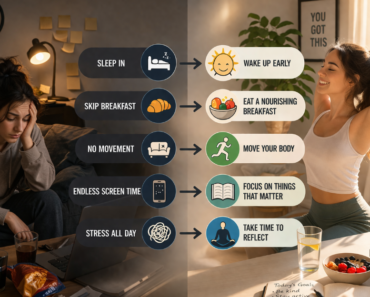
We often think of health in terms of the “big” things: the grueling gym sessions, the strict diets, or the medical check-ups we schedule once a year. However, our biology is actually shaped by the thousands of micro-decisions we make every single day. These are the habits so deeply ingrained in our routines that we no longer notice them. We call them “everyday habits,” but to your cells, they are constant inputs that either support your vitality or act as a “biological tax.”
When these habits go unchecked, they create a state of chronic low-level stress. You might not feel “sick” today, but you might feel “unbalanced”—struggling with brain fog, digestive issues, or inconsistent energy. By auditing these seven common habits, you can stop the invisible drain on your health and start building a more resilient system.
1. The “Digital Lean” and Respiratory Restriction
Look around any coffee shop or office, and you will see the “Digital Lean”—the posture of a person staring into a smartphone or laptop. While we worry about the neck pain (often called “Tech Neck”), the real health impact is much deeper.
When your head leans forward and your shoulders round, your ribcage collapses. This prevents your diaphragm from fully expanding, forcing you into shallow “chest breathing.” This habitual restriction of the breath sends a continuous signal to your autonomic nervous system that you are in a state of crisis. Over time, this “postural stress” keeps your cortisol levels slightly elevated, affecting everything from your digestion to your emotional regulation.
2. Constant “Micro-Sipping” of Flavored Drinks
Hydration is essential, but the habit of constantly “micro-sipping” on beverages—even those labeled as “healthy” or “sugar-free”—can disrupt your metabolic flexibility.
Every time you consume something with flavor or artificial sweeteners, your brain prepares the body for a digestive event. If you are constantly sipping on flavored waters, sodas, or lattes throughout the day, you never allow your digestive system to enter the “Migrating Motor Complex” (MMC) phase. The MMC is the body’s “internal broom” that cleans the gut between meals. By constantly introducing inputs, you may be contributing to persistent bloating and a sluggish metabolism.
3. The “Artificial Twilight” and Melatonin Suppression
Our ancestors lived by the rhythm of the sun and the fire. Today, our “fire” is the blue light emitting from our screens. The habit of scrolling through social media or watching television right until the moment you turn off the light creates an “artificial twilight” that confuses your brain.
Blue light suppresses the production of melatonin, the hormone responsible not just for sleep, but for cellular repair and antioxidant protection. Even if you manage to fall asleep, the quality of that sleep is often compromised. Your brain stays in a lighter, more reactive state, preventing the deep “glymphatic drainage” that clears metabolic waste from your brain.
4. Over-Sanitizing Your Environment
In a post-pandemic world, the habit of using antibacterial gels and harsh cleaning sprays for every surface has become second nature. However, your health is deeply dependent on your microbiome—the trillions of beneficial bacteria that live on your skin and in your gut.
Over-sanitization creates a “biological vacuum.” By killing off the diverse bacteria in your immediate environment, you are essentially “un-training” your immune system. A lack of exposure to natural, harmless microbes can lead to an overactive immune response, which is often linked to increased allergies and systemic inflammation. Health is found in balance, not in a sterile void.
5. Wearing Restrictive Clothing and Shoes
We rarely think of our clothing as a health factor, but the habit of wearing tight waistbands, restrictive “shapewear,” or narrow-toed shoes has a cumulative effect.
Tight clothing can compress the lymphatic vessels, which are the “sewage system” of your body. When lymphatic drainage is restricted, waste products can accumulate in the tissues, leading to puffiness and fatigue. Similarly, narrow shoes change the mechanics of your gait, sending ripples of misalignment up through your knees, hips, and lower back. Your body was designed to move freely; your wardrobe should allow it to do so.
6. The Habit of “Emotional Suppression”
We often treat our emotions as separate from our physical health, but the habit of “pushing through” stress or suppressing frustration has a measurable physical cost.
When you suppress an emotional response, your body remains in a state of physiological arousal. Your heart rate remains slightly higher, and your muscles hold onto tension. This habit creates a “bottleneck” in your nervous system. Over years, this chronic “internal pressure” can manifest as high blood pressure, tension headaches, or even autoimmune flare-ups. Learning to acknowledge and “move” through stress is as much a health habit as eating your vegetables.
7. Sedentary “Stillness” (Even if You Exercise)
Many people believe that a 60-minute workout at the gym “cancels out” eight hours of sitting at a desk. Unfortunately, biology doesn’t work that way. The habit of remaining still for hours at a time leads to a stagnation of the blood and a decrease in insulin sensitivity.
Your muscles are meant to be metabolic engines. When they are inactive for long periods, they stop efficiently clearing glucose from your blood. The solution isn’t necessarily more exercise, but more movement. Breaking up your stillness with “movement snacks”—two minutes of walking or stretching every hour—tells your body to keep its metabolic processes running at a higher level.
Reclaiming Your Vitality
Health is not a destination you reach; it is a byproduct of the habits you repeat. The “biological tax” of modern life can be heavy, but it is also reversible. You don’t need to change all seven habits overnight. Start by noticing the “Digital Lean” or delaying your “Artificial Twilight” by thirty minutes.
The Bottom Line: Your body is incredibly resilient and is always working toward balance. When you remove the daily habits that are subtly affecting your health, you give your system the space it needs to thrive. Listen to the signals, audit your routine, and remember that small shifts today lead to a completely different health trajectory tomorrow.
Disclaimer: This content is for informational purposes only and does not constitute medical advice. Everyday habits are part of a larger health picture. Always seek the advice of your physician or other qualified health provider with any questions you may have regarding a medical condition.