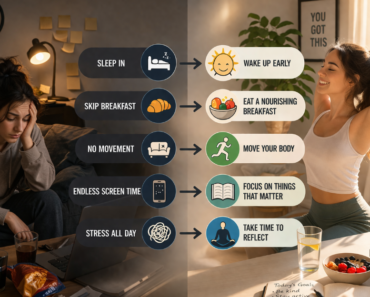
The first sixty minutes of your day are essentially the “operating system” for your entire physiology. Most people spend this critical window in a state of reactive chaos—hitting the snooze button, rushing through a shower, and scrolling through stressful news headlines while standing over a toaster. By the time they arrive at their desk, their nervous system is already frayed, and their energy reserves are depleted.
What if you could change the trajectory of your entire day by simply aligning your morning actions with your body’s natural biological rhythms? Science shows that our circadian clocks—the internal mechanisms that regulate everything from hunger to focus—are incredibly sensitive to the inputs we provide right after waking up. By adopting a few strategic “activation habits,” you can stabilize your mood, sharpen your focus, and maintain steady energy until the sun goes down.
The Power of the “First Light”
The single most important habit you can adopt happens outside your window. Within thirty minutes of waking up, your eyes need to receive natural sunlight. This isn’t just about “waking up”; it is a complex hormonal trigger.
When photons from the sun hit the melanopsin cells in your retina, they send a direct signal to the suprachiasmatic nucleus in your brain. This signal tells your body to stop producing melatonin (the sleep hormone) and to begin a healthy “cortisol pulse.” This morning cortisol spike is vital—it sets an internal timer that determines exactly when you will feel tired sixteen hours later. Even on a cloudy day, the lux (light intensity) outside is significantly higher than any indoor office light. Just five to ten minutes of outdoor light exposure can effectively “anchor” your biological clock, preventing the afternoon slump and improving sleep quality at night.
Strategic Hydration: Beyond Just Water
During the six to eight hours you spend sleeping, your body is hard at work repairing tissues and filtering out metabolic waste. This process uses a significant amount of water, meaning you wake up in a state of physiological dehydration.
However, many people make the mistake of “drowning” their system with plain water, which can sometimes flush out essential minerals. To truly change how you feel, your morning hydration should include electrolytes. Adding a small pinch of high-quality sea salt and a squeeze of fresh lemon to your first glass of water helps your cells actually absorb the fluid. Sodium is essential for the electrical communication between your neurons. By replenishing these minerals first thing in the morning, you support your blood pressure and cognitive clarity before your brain has a chance to feel “foggy.”
The 90-Minute Caffeine Rule
This is perhaps the most difficult habit for many to adopt, but it is also the most transformative. Most of us reach for coffee within minutes of waking up. However, the molecule responsible for making us feel sleepy, adenosine, is still being cleared out of our system during the first hour of the day.
If you ingest caffeine immediately, it blocks the adenosine receptors but doesn’t allow the adenosine to actually leave the system. When the caffeine eventually wears off, you experience a “double crash” because all that built-up adenosine rushes back in at once. By delaying your first cup of coffee for 90 to 120 minutes, you allow your body to naturally clear the “sleep fog.” This leads to a much smoother energy curve throughout the afternoon, eliminating the need for that third or fourth cup of coffee at 3:00 PM.
Thermal Activation: The Power of Cold
You don’t necessarily need a full ice bath to reap the benefits of cold exposure. Ending your morning shower with just thirty to sixty seconds of cold water can trigger a significant release of norepinephrine and dopamine.
This isn’t just a temporary “jolt” of energy. Research has shown that short bursts of cold exposure can increase dopamine levels by up to 250%, and unlike the dopamine hit you get from checking social media, this increase is sustained for several hours. This “thermal shock” also activates “brown fat,” a type of adipose tissue that burns calories to generate heat, giving your metabolism a gentle nudge right at the start of the day.
Establishing the “Cognitive Shield”
In a world designed to steal our attention, the habit of intentional silence is a superpower. Most people’s morning habits involve immediate “input”—checking emails, listening to podcasts, or watching the news. This forces the brain into a high-stress “Beta” wave state before it has had time to process the transition from sleep.
Creating a “Cognitive Shield” means spending the first twenty minutes of your day without digital input. This allows your brain to stay in an “Alpha” state longer—a state associated with creativity, calm, and high-level problem-solving. Whether you use this time for light stretching, journaling, or simply sitting with your thoughts, you are telling your brain that you are in control of your attention, not your smartphone.
The Protein-Centric Start
Finally, how you break your fast dictates your blood sugar stability for the next twelve hours. A morning habit of consuming at least 30 grams of protein—whether from eggs, Greek yogurt, or a high-quality shake—is essential for satiety and metabolic health.
Protein prevents the insulin spikes that lead to mid-morning cravings and brain fog. It provides the amino acids necessary for neurotransmitter production, ensuring that your brain has the “building blocks” it needs to stay focused and emotionally stable throughout the workday.
The Bottom Line
You don’t need to overhaul your entire life to feel better. You simply need to respect the biological requirements of being human. By prioritizing light, strategic hydration, delayed caffeine, and a cognitive shield, you aren’t just “getting through” your morning; you are building a foundation for a high-performance life. Start with one of these habits tomorrow, and pay attention to the whispers of your body as your energy begins to transform.
Disclaimer: This content is for informational purposes only and does not constitute medical advice. Morning routines should be tailored to individual health needs. Always seek the advice of your physician or other qualified health provider with any questions you may have.